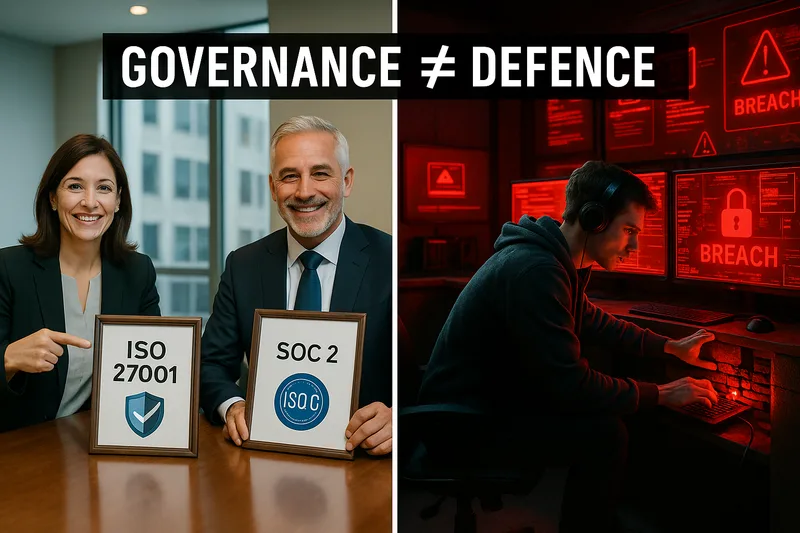
After decades of watching government departments wave certificates while getting breached, I'm done pretending compliance equals security. Yes, you need SOC 2 for some contracts. Yes, ISO27001 impresses procurement teams. But if you think those certificates will stop ransomware, you're living in a dangerous fantasy. I've seen FTSE 100 companies with pristine audit reports get absolutely destroyed by basic phishing attacks. It's time for some brutal honesty about what compliance actually protects
Tired of consultants charging £10,000 for Cyber Essentials implementation that you can do yourself in six weeks? This step-by-step guide cuts through the consultant bollocks and shows you exactly how to implement CE yourself. Real timelines (6 weeks max), real costs (under £4,000), real templates you can actually use. No consultant dependency, no ongoing fees, no compliance theatre. Just practical security that actually protects your UK SMB while meeting NCSC requirements. Stop funding consultan
Another UK SMB just spent £40,000 on ISO27001 certification. Three months later: ransomware. The compliance industry has convinced every 15-person company they need enterprise-grade paperwork to survive. Bollocks. While you're documenting your password policy in 47 formats, criminals are walking through the digital front door you forgot to lock. Today's deep-dive exposes the real cost of compliance theatre vs actual security. Spoiler: Cyber Essentials might actually protect you, ISO27001 will de
Too many UK businesses trust ISO27001 and SOC 2 to keep them safe. They shouldn’t. These frameworks focus on governance, not enforcement. When ransomware hits or supply chains collapse, it’s always the same gaps: patching failures, lack of segmentation, poor endpoint hygiene. Cyber Essentials, especially CE+, isn’t a tick-box. It’s the defensive baseline that would have saved countless organisations from disaster. This article lays out the real problem and preaches the blunt truth: no ISO, no SO